

· AFX Research
When a Former Spouse Files for Bankruptcy After the Decree
The decree divided the property and the bankruptcy was filed afterward. What a discharge actually reaches, and why the title search on the house comes back looking normal.
Table of Contents
A divorce ends and a bankruptcy begins, often within a couple of years, and frequently because the divorce is what made the filing necessary. One household became two on the same income, and one of the two did not survive the arithmetic.
For the other spouse, the question is narrower than it feels. The decree is a court order and the bankruptcy is a different court doing something else. What matters is which of the obligations in that decree survive, and what happens to the house.
What a discharge reaches
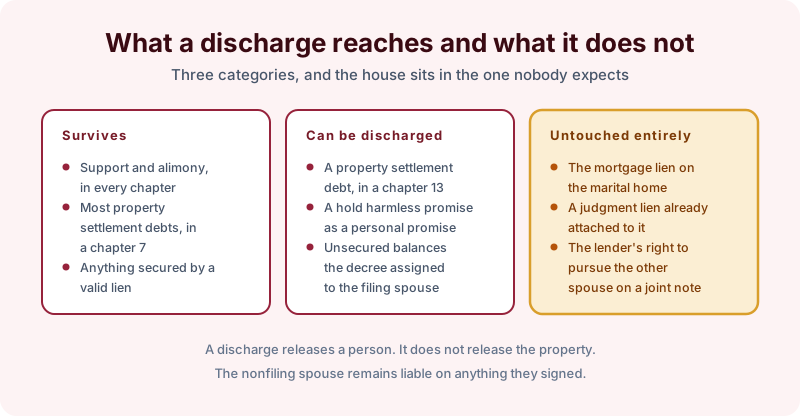
Support obligations survive in every chapter. Alimony and child support are not dischargeable and that is not a close question.
Property settlement obligations are different and the answer depends on the chapter. In a Chapter 7 they generally survive. In a Chapter 13 a property settlement debt can be discharged on completion of the plan, which is the route by which an equalizing payment or a hold harmless promise can simply disappear.
The part that catches people is the third category. A discharge operates against a person, not against property. The mortgage lien on the marital home is untouched. A judgment lien that had already attached is untouched. And critically, a lender holding a joint note can still pursue the spouse who did not file, regardless of what the decree said about who was responsible. A hold harmless clause binds the ex-spouse, it does not bind the bank.
Why the title search looks normal
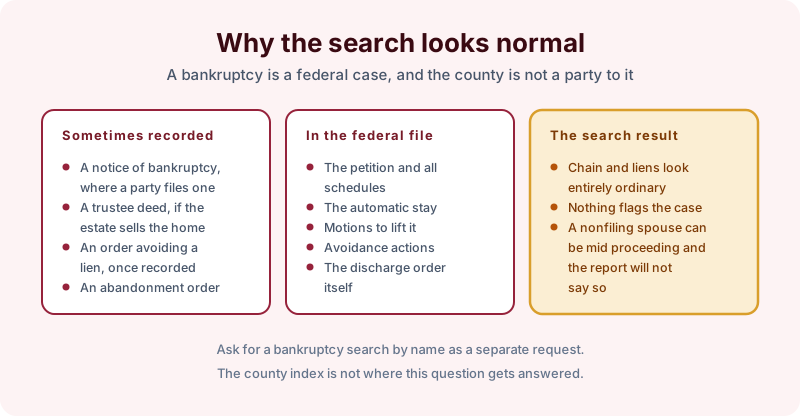
Bankruptcy is a federal proceeding and the county recorder is not part of it. Unless somebody files a notice, a trustee deed, or an order avoiding a lien, nothing about the case reaches the land record at all.
So a search on the marital home returns the ordinary chain and the ordinary encumbrances, and says nothing about a live proceeding affecting the person who used to own half of it. This is the same boundary described in bankruptcy during a divorce title search, and the answer is the same one, which is to ask for a bankruptcy search by name as a separate request, because the county index will not supply it.
Where the exposure actually sits
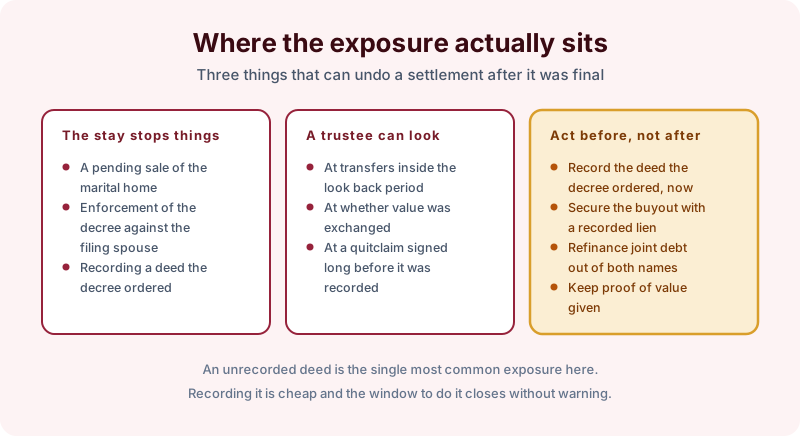
The automatic stay is immediate and broad. A pending sale of the former marital home stops. Enforcement of the decree against the filing spouse stops. If a deed the decree ordered has not yet been signed or recorded, getting it done becomes considerably harder.
A trustee can also look backward. Transfers made within the statutory look back period are examined for whether reasonably equivalent value was exchanged, and a transfer of a half interest in a house under a decree is a transfer. Most divorce settlements survive that review because they were adversarial and value was exchanged on both sides, but the review happens and the documentation matters.
The sharpest exposure is the unrecorded deed. A quitclaim signed at the settlement conference and left in a file is a well known pattern, and it is a bad one here for the reasons in unrecorded deeds and side agreements in a divorce. Until it is recorded, the record still shows the filing spouse as an owner, and a trustee reads the record.
What to do while there is still time
Record the deed the decree ordered, immediately, without waiting for anything else to be finished.
Secure any buyout or equalizing payment with a recorded lien rather than a promise, which is the point of securing a divorce buyout against the marital home. A secured claim behaves completely differently in a bankruptcy than an unsecured one does.
Get joint debt out of both names where the decree assigned it to one of them. A refinance that removes a name is worth considerably more than a hold harmless clause that does not.
The takeaway
A post decree bankruptcy does not reopen the divorce, and it does not clear liens on the house. It can discharge a personal obligation your settlement depended on, it can freeze a sale without notice, and it leaves the record on the property looking entirely unremarkable.
If you need the current state of title on the home, tell us the property or order a search.