

· AFX Research
How a Title Search Finds Undisclosed Real Estate in a Divorce
Where a nationwide records search actually looks, why name variations decide what it finds, and the line between what the record documents and what it cannot prove.
Table of Contents
When a property settlement depends on knowing what the marital estate holds, a financial disclosure is where you start, not where you stop. A title search checks that starting point against what has actually been recorded. It is the same records work behind what a quitclaim deed between spouses does and does not change, pointed at a different question: is there real estate here that nobody listed?
A disclosure is a statement, not a search
A disclosure rests on the memory, the paperwork, and the cooperation of the person signing it. Plenty are complete. Others miss a parcel for ordinary reasons — an inherited fractional interest, a lot bought years ago and forgotten, a timeshare nobody thinks of as real estate. Some miss a parcel for less ordinary reasons.
A records search does not tell you which explanation applies. It reports what has been recorded against the names and parcels you supply, attaches the instruments it finds, and leaves the conclusions to you and your client. Keeping that line clean is what makes a report useful in a filing.
Where undisclosed property turns up
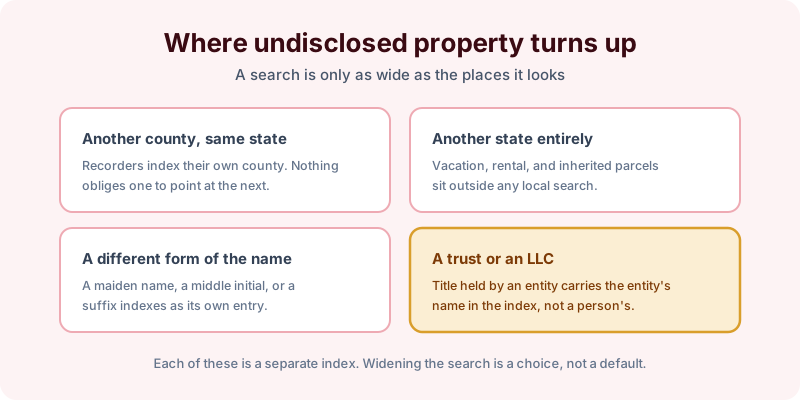
Real estate is poor at hiding, but it sits in places a quick local lookup never reaches. County recorders index their own county, and nothing obliges one to point at the next. A parcel two counties over is not concealed, it is simply somewhere else. The same holds across state lines, where vacation homes, rental property, and inherited land commonly sit.
Title held by a trust or an LLC is the case people miss most often. The index carries the entity’s name, so a search run against two personal names returns nothing, and returns it convincingly.
Names decide what a name search finds
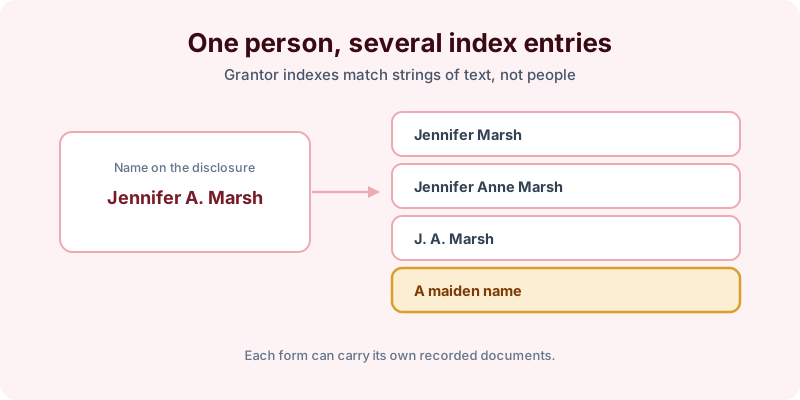
Grantor and grantee indexes match strings of text. They do not know that Jennifer A. Marsh, Jennifer Anne Marsh, J. A. Marsh, and a maiden name are one person. Search one form and you get one form’s documents.
This is the cheapest place to widen a search and the easiest to skip. Before ordering, collect every name the other party has recorded under: maiden and prior married names, middle names spelled out, initials, suffixes, and the name of any trust or company they have mentioned. Indexing conventions differ from county to county, so the same list of variants can perform differently in two jurisdictions.
Recording dates carry their own information
A search returns dates as well as documents. A transfer out of joint ownership recorded shortly before a petition is a fact worth having, and the recorded instrument is the primary evidence of it. Whether it matters legally is a question for you and your client, not for the abstractor. What we can do is hand over the deed, the date the recorder stamped it, and the chain of title around it.
What the report proves, and what it does not
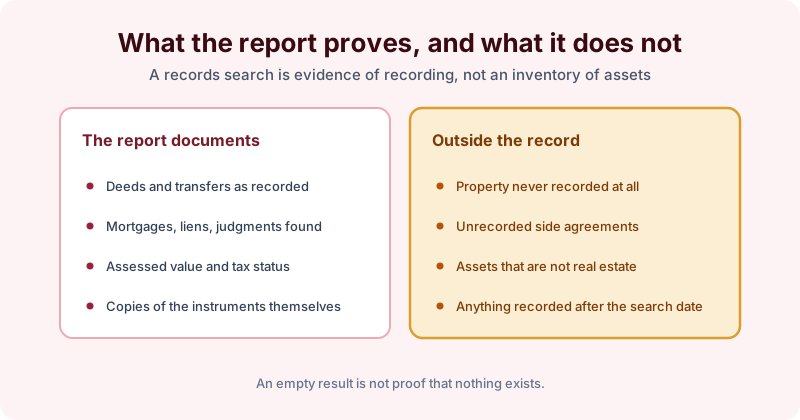
A title report documents what has been recorded: deeds and transfers as recorded, the mortgages, judgments, and liens found of record, assessed value and tax status, and copies of the instruments themselves. Our reports and search products are built around that record.
What a report cannot do is prove a negative. Property never recorded in a searched name does not appear. Unrecorded agreements between the parties do not appear. Anything filed after the search date does not appear. An empty result is evidence that nothing was found of record in the places searched, which is not the same as evidence that nothing exists.
The takeaway
Scope is a decision, and it is made before the order goes in: which names, which counties, which states. Our process and turnaround page covers how an order moves once that scope is set, and the state directory shows where we work. Start the order online, or send us the names and addresses and we will tell you what a search of that scope would and would not cover before anything is ordered.